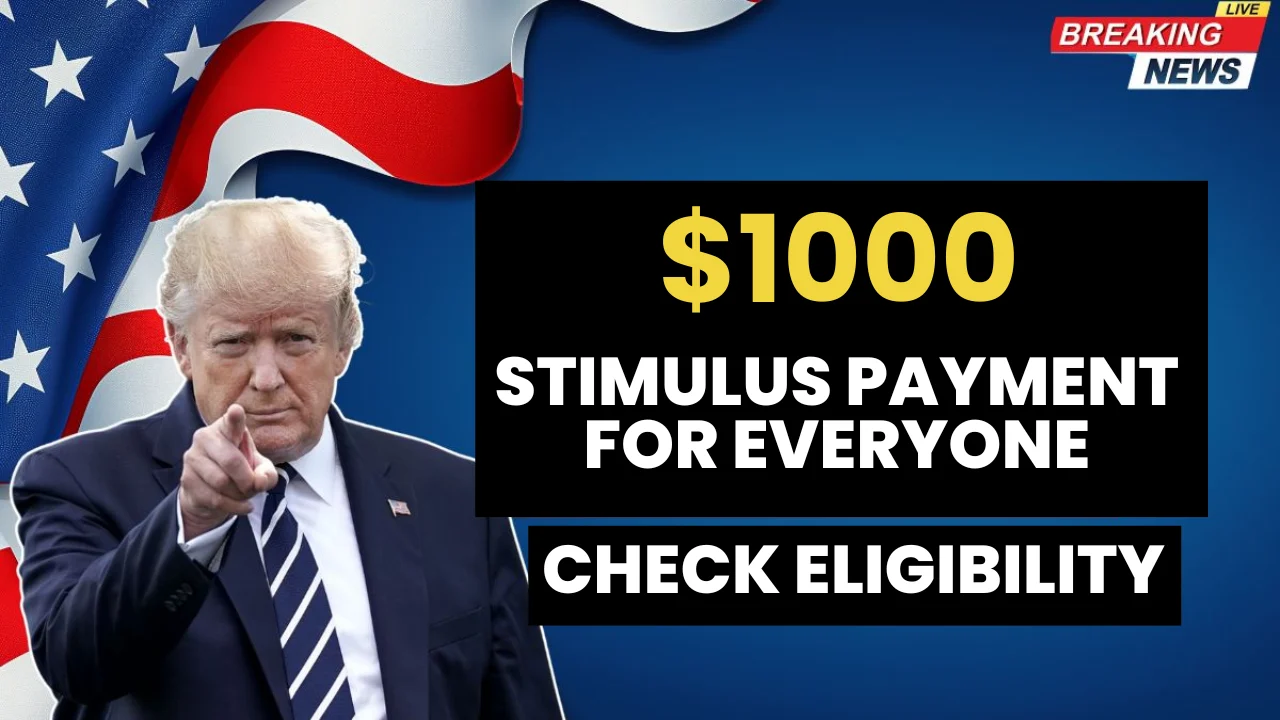
A widely shared claim that “everyone” in the U.S. can now get a new 1,000‑dollar stimulus payment is not backed by any official government program. Instead, it traces back to viral videos and websites that use government imagery to promote what fact‑checkers and regulators describe as scams or misleading offers.
What the 1,000-dollar claim is about
The buzz centers on social media posts and videos that say a new 1,000‑dollar “stimulus card” or “emergency relief card” has been approved to help Americans cover gas, groceries, and bills. These promotions usually show footage of President Donald Trump or official‑looking graphics, then invite viewers to “claim” their money through a link.
In most cases, users are sent to generic sites that mimic government relief pages but are not affiliated with any federal agency. The pages typically ask for personal information such as name, email, or phone number in exchange for supposed access to the 1,000‑dollar benefit.
No approved 1,000-dollar federal stimulus
Independent fact‑checking organizations have reviewed these claims and found no law, congressional vote, or White House action that created a universal 1,000‑dollar stimulus program for all Americans in 2024 or 2025. They note that while earlier pandemic‑era stimulus checks did go out under previous legislation, no new nationwide 1,000‑dollar payment has been authorized since.
The U.S. government also warns that it does not offer “free money” to individuals for personal expenses through social media links, and that official programs are communicated through trusted channels, not viral posts. Legitimate federal websites use “.gov” or “.mil” domains and do not require people to click through ads or unrelated pages to access benefits.
How the scams typically work
The misleading 1,000‑dollar stimulus offers tend to follow a familiar pattern. A video or post claims that a new cost‑of‑living or emergency relief card has “just been approved,” often suggesting there is a limited window to apply. The link then leads to a non‑government site that may:
- Ask users to complete a short quiz or survey before “unlocking” the benefit.
- Request personal contact details, which can be used for aggressive marketing or worse.
- Funnel people into unrelated offers, subscriptions, or financial products that have nothing to do with federal aid.
Experts caution that such setups are classic red flags for scams or data‑harvesting schemes, not genuine stimulus programs.
Why this matters for everyday Americans
The renewed wave of 1,000‑dollar stimulus rumors comes at a time when many households are feeling pressure from higher living costs, making them more likely to click on offers that promise fast relief. Misleading posts can raise false hopes, push people toward risky financial decisions, or expose them to identity‑theft attempts.
Staying skeptical of sensational claims is essential: if a stimulus offer does not come directly from an official “.gov” source or trusted news outlet, it is safest to assume it is inaccurate or deceptive. People who encounter such schemes are encouraged by regulators to report them to consumer protection agencies so others do not get drawn in by the same pitch.