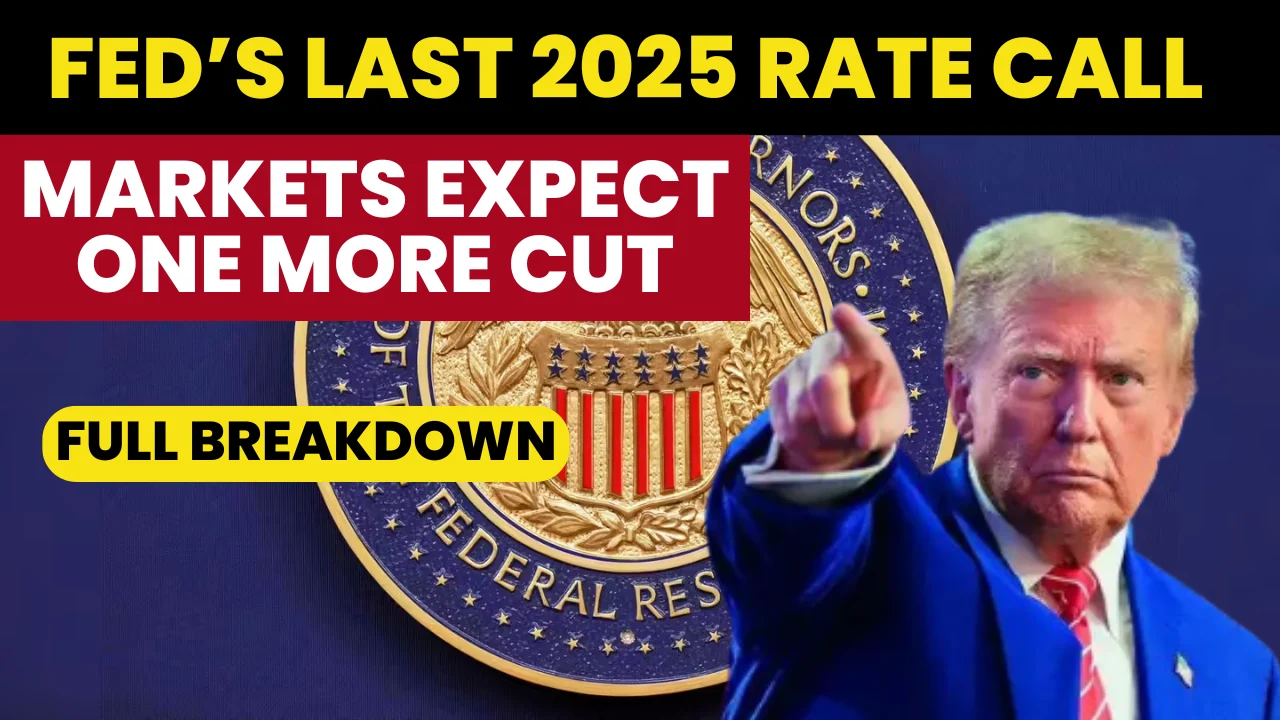
The Federal Reserve’s last interest rate decision of 2025 is shaping up to be one of its most contentious in years.
On Wednesday, December 10, policymakers will announce whether they plan to trim borrowing costs again, even though they’re missing two of the economic reports they usually rely on most: the latest jobs numbers and fresh inflation data. Both figures were delayed by the recent government shutdown, forcing the Fed to move ahead without the usual hard evidence on how the economy is holding up.
Instead, officials must lean on a year’s worth of mixed and often conflicting signals. Hiring has clearly cooled, layoffs are happening more often, and price pressures have re‑intensified, helped in part by tariff-driven cost increases under the Trump administration. That combination—softer labor markets but hotter inflation—has made the Fed’s job unusually tricky as it tries to juggle its dual mandate: keeping prices stable while also supporting maximum employment.
Markets almost sure a cut is coming
Despite the lack of fresh data, Wall Street has largely made up its mind. Futures traders overwhelmingly expect another rate reduction.
According to the CME FedWatch tool, which tracks market-implied odds of Fed moves, there is an 88 percent chance that policymakers will vote for a quarter-point cut at this meeting. If they follow through, the central bank’s benchmark federal funds rate would drop into a new target range of between 3.75 percent and 4 percent.
That would extend a series of cuts that began in the fall, reinforcing the sense that the Fed has shifted into easing mode as growth slows and job market risks mount.
What a cut would mean for borrowers
For everyday Americans, another reduction would not be a game-changer, but it could offer some modest relief.
Because many borrowing costs are tied, directly or indirectly, to the Fed’s benchmark rate, a lower fed funds range can gradually filter through to consumers. People carrying balances on credit cards or tapping home equity lines of credit could see interest charges ease slightly. That matters at a time when many households still say they feel squeezed by higher prices on essentials such as food and healthcare.
The cut would not erase years of cost increases, but it could shave a bit off monthly payments and provide some breathing room for families already stretched by inflation.
A deeply split Fed heads into the vote
Inside the Fed itself, the debate is unusually intense.
Committee members are far from united on the wisdom of another cut, especially without the latest jobs and inflation figures in hand. Federal Reserve Bank of New York President John Williams signaled in November that, in his view, signs of a weakening labor market now outweigh the risks posed by stubborn inflation, suggesting he leans toward more support for growth and employment.
But others remain wary of moving too aggressively. They worry that cutting too quickly or too often could undermine the Fed’s fight against rising prices and risk re‑igniting inflation just as it appears to be re‑accelerating.
Michael Pearce, chief U.S. economist at Oxford Economics, captured the mood in a recent note, writing that it is “difficult to recall a time when the Federal Open Market Committee has been so evenly divided about the need for additional rate cuts than the upcoming December meeting.” Even so, Pearce expects the doves to narrowly prevail, forecasting that the committee will ultimately vote for a quarter-point reduction.
Political pressure raises the stakes
Politics are never supposed to drive Fed decisions, but the pressure this year has been unmistakable.
President Donald Trump, along with several top administration officials, has spent months publicly criticizing Fed Chair Jerome Powell, arguing that rate cuts should have come earlier and possibly been more aggressive. The central bank repeatedly insists it operates independently of the White House, but the drumbeat of criticism has formed a noisy backdrop to every policy meeting, including this one.
That political tension only adds to the drama heading into Wednesday’s announcement. The Fed must now decide whether to act again on rates based on incomplete data, persistent inflation, deteriorating labor signals—and with the country, markets, and the White House all watching closely.
However the vote breaks, the December decision will send an important signal about how the Fed plans to navigate a fragile economy in 2026: prioritizing growth and jobs with lower rates, or holding the line to keep inflation from gaining more ground.