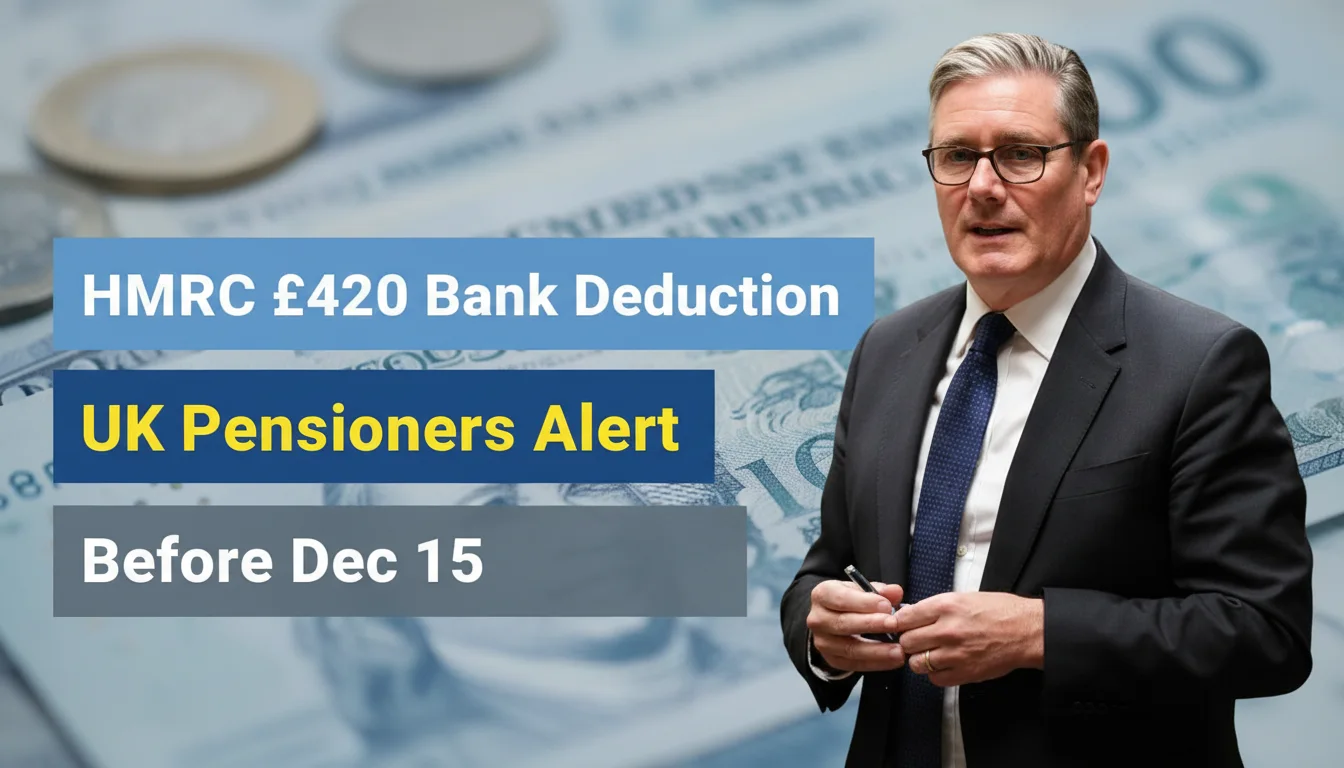
From December 15, HMRC can take up to £420 directly from some pensioners’ bank accounts to recover debts. Find out who’s at risk and how to protect yourself.
This isn’t a new blanket charge on all older people. Instead, it’s a tougher, expanded way for HMRC to collect money it says is already owed — and it could hit some low‑income pensioners hard if they’re not prepared.
Here’s what’s changing, who’s most at risk, and what you can do now to protect your income.
What is the new £420 HMRC deduction about?
From December 15, HMRC is widening its use of “direct bank account recovery” alongside major UK banks. That means, in certain cases, money can be taken straight from a person’s bank account to cover:
- Outstanding tax liabilities
- Overpaid tax credits
- Benefit overpayments handled by HMRC
- Unpaid Self Assessment tax
- Historic underpaid PAYE tax
The much‑talked‑about £420 is not a standard fee or tax. It’s the maximum standard amount HMRC may take in a single recovery cycle in some lower‑balance cases. Many people won’t see anything close to that — and most pensioners won’t be affected at all.
Still, for those who are, even a one‑off deduction of hundreds of pounds could cause real hardship at a time when many already struggle with rising energy bills, food prices, and housing costs.
Why HMRC is doing this now
During the pandemic and the early stages of the cost‑of‑living crisis, the government softened some recovery efforts. Overpayments and certain debts were paused, delayed, or collected more slowly to avoid piling more pressure on households.
Now, HMRC says it is moving into a new “systematic recovery” phase aimed at:
- Improving fairness between taxpayers
- Preventing debts from building up over years
- Protecting public finances
- Applying consistent rules across age groups
In practice, that means HMRC is using its existing legal powers more widely and more routinely. Direct bank recovery has existed before, but it was used rarely. The December change is less about inventing a new power and more about rolling out an existing one at scale — which is exactly what worries campaigners for older people.
Who is most at risk of a £420 deduction?
Not every pensioner is affected. The new approach only applies if HMRC already believes you owe money.
You’re more likely to be at risk if any of the following apply:
- You received tax credits in previous years and were later told you were overpaid
- Your PAYE tax code was wrong in the past, leaving underpaid tax
- You completed a Self Assessment and still have an unpaid balance
- You received working tax credits before you retired
- Benefit overpayments were passed to HMRC to collect
- You have unpaid penalties or interest linked to HMRC debts
One key detail: the State Pension is not taxed at source, but the bank account it’s paid into can still be targeted. That means HMRC might not touch your pension payment before it arrives — but it could reduce the money in your account shortly afterward if recovery is triggered.
How the new bank deductions will work
HMRC has several tools it can use to recover debts, including:
- Adjusting tax codes
- Taking money from private or workplace pensions
- Setting up direct debit payment plans
- Direct bank account recovery (the area being expanded from December 15)
Under the updated approach, HMRC can instruct a bank to:
- Temporarily freeze a portion of the money in your account(s).
- Remove the authorized amount once legal checks are complete.
Banks are legally obliged to cooperate once HMRC has followed the correct procedure.
There are, however, some important safeguards:
- At least £5,000 must be left untouched across all your bank accounts.
- Extra checks are required for joint accounts to avoid taking money that belongs solely to the other account holder.
- You should usually receive advance notice from HMRC.
- HMRC must consider vulnerability in certain cases (for example, serious illness or severe financial hardship).
The £420 figure is a cap in some low‑balance cases, not a guarantee that this amount will be taken. In many situations, HMRC will spread recovery over installments rather than taking the maximum in one go.
How this could affect your pension payments
For most people, HMRC will not directly reduce State Pension at source. But the timing still matters.
Imagine this scenario:
- Your pension is paid into your bank on Monday.
- HMRC has already authorized a bank recovery for a debt in your name.
- Later that week, the bank carries out the instruction and removes up to the agreed amount.
Even though your pension payment went in as normal, your available balance can suddenly drop — potentially disrupting:
- Monthly budgets
- Direct debits and standing orders
- Rent and utility payments
- Access to emergency savings
This is why advisers are warning pensioners to be especially alert around payment dates once the new approach kicks in.
What notice will you get — and why people miss it
HMRC is supposed to try to contact you before taking funds, except in rare, more serious enforcement situations. You might see:
- A brown HMRC letter about debt recovery
- A message in your online HMRC account
- A warning letter or message from your bank
- A formal “Notice of Enforcement”
- An offer of a time‑to‑pay arrangement
Still, many pensioners never see these warnings. Common reasons include:
- Moving home without updating HMRC
- Not using online Government Gateway services
- Ignoring letters that look like scams
- Health or cognitive issues that affect reading mail
That’s why experts are urging older people to proactively check their HMRC status now, rather than waiting until money disappears from their account.
What pensioners should do right now
If you want to stay ahead of potential deductions, there are a few practical steps you can take immediately.
If you use online services:
- Log in to your Government Gateway account.
- Check for:
- Outstanding balances
- Past overpayments
- Any current payment plans
- Active enforcement or collection cases
If you don’t use digital services:
- Call HMRC’s debt management line and ask them to confirm whether you owe anything and what action is planned.
If you do owe money but can’t afford a £420 hit, you may be able to negotiate. HMRC can offer:
- Monthly installment plans
- Lower recovery rates
- Temporary pauses on payments
- Special arrangements for vulnerable customers
Extra protections for vulnerable pensioners
HMRC has specific guidelines for people facing serious difficulties. You may qualify for more flexible treatment if you are dealing with:
- Long‑term illness
- Disabilities
- Cognitive conditions (such as dementia)
- Severe financial hardship
- Recent bereavement
In those situations, you can ask HMRC to place a “vulnerability marker” on your case. That label is designed to ensure your situation is flagged and considered before tougher actions, like bank account deductions, go ahead at full strength.
From December, it also makes sense to:
- Keep a closer eye on your balance around pension payment weeks.
- Use banking alerts or notifications where available.
- Maintain a small emergency cash buffer if you can.
- Track any unexpected dips in your account and question them promptly.
Can you get a refund if money is taken?
In some cases, yes — but it’s a slow and uncertain route, so prevention is far better than relying on refunds.
You may be able to get money back if:
- HMRC made a mistake in the calculation
- The wrong person was targeted
- The underlying debt is disputed
- HMRC didn’t properly follow its vulnerability procedures
- The wrong account was used (for example, where a joint account was mishandled)
Refunds can take weeks to process, which is little comfort if your heating bill or rent is due now. That’s why checking your position early and engaging with HMRC before enforcement kicks in is so strongly recommended.
Why charities and campaigners are worried
Groups like Age UK, Independent Age and Citizens Advice have raised red flags over how this change could hit older people with the least financial resilience.
Many pensioners rely on:
- State Pension as their main or only income
- Pension Credit top‑ups
- Small private pensions
- Disability benefits
A sudden £420 loss — or even a smaller chunk taken at the wrong time — can throw essentials into chaos, including:
- Heating costs in winter
- Council tax payments
- Food budgets
- Prescription and health‑related expenses
Campaigners are calling for stronger automatic protections for those on means‑tested benefits and for extra caution when dealing with older, low‑income households.
Opposition politicians and pension groups are also pushing for a temporary winter pause on aggressive recovery from pensioners, arguing that the government’s protections do not go far enough in practice.
What has changed compared with before?
Before this December rollout, HMRC’s focus was more on:
- Adjusting tax codes
- Deducting via payroll
- Agreeing voluntary direct debit plans
Direct bank account recovery was available but used sparingly.
The December change doesn’t create a brand‑new legal weapon — it broadens and normalizes the use of an existing one, particularly across more cases and more consistently. That increase in scale is what many experts and charities see as risky.
If debt letters are ignored, the consequences can escalate over time, potentially leading to:
- Larger, more aggressive deductions
- Extra penalties and interest
- County Court claims
- In extreme situations, bailiff involvement
- Frozen or restricted accounts
Again, early engagement with HMRC almost always leads to a better outcome than waiting for enforcement.
Watch out for scams exploiting the rule change
Whenever a new government policy hits the headlines, scammers are quick to copy the language and panic people into paying them instead of the authorities.
With this HMRC rule change, be wary of:
- Texts saying money is “about to be taken” unless you act now
- Emails asking you to “confirm” or provide bank details
- Phone calls demanding immediate payment over the phone
- Links to fake Government Gateway or HMRC websites
Remember:
- HMRC will not ask for your full bank details by text or email.
- If in doubt, contact HMRC directly using numbers from the official government website, not from the message you received.
Special issues with joint bank accounts
Joint accounts make things more complicated. HMRC must:
- Work out what share of the funds belongs to the debtor
- Avoid taking money that belongs solely to the other account holder
- Apply the £5,000 minimum balance protection across accounts correctly
If you share an account with a spouse, carer, or adult child and you receive any hint that HMRC is considering enforcement, it’s important to contact HMRC quickly and explain the account arrangement.
How a deduction can affect other benefits and bills
The deduction itself doesn’t reduce your entitlement to benefits. However, it can still cause knock‑on problems by:
- Pushing your balance below what’s needed for scheduled direct debits
- Triggering bank charges if payments bounce
- Making it harder to manage regular expenses on a tight budget
If a deduction leaves you unable to cover essentials, you may become eligible for:
- Short‑term benefit advances
- Emergency hardship help from your local council
- Energy or fuel support schemes
These are safety nets rather than long‑term solutions, but they can help bridge a crisis following an unexpected deduction.
What ministers say — and what critics argue
Government ministers insist the policy is balanced and fair, emphasizing that:
- Only people with confirmed debts are affected
- Banks must leave at least £5,000 untouched
- Vulnerable households are supposed to receive extra safeguards
- Flexible payment plans remain widely available
Opposition MPs, charity groups, and pension organizations are not convinced this will always align with reality for older people living on the edge financially. They continue to lobby for stronger automatic protections and, at minimum, a seasonal pause during winter for pensioner households.
Bottom line: what pensioners should remember
A few key points sum up the December rule change:
- The £420 deduction is not a new tax or automatic charge on all pensioners.
- It only applies if HMRC has identified a debt in your name.
- In most cases, you should receive some form of warning or notice first.
- You can often negotiate smaller or spread‑out payments instead of a large lump sum.
- Extra protection exists for people who are ill, disabled, bereaved, or in serious hardship.
- Scam activity around this topic is increasing — always verify who you’re dealing with.
- The earlier you respond to HMRC letters or messages, the less likely you are to face sudden, painful deductions.
As the new approach comes into force, awareness is your best defense. Checking your HMRC record, updating your contact details, and talking to the tax office if there’s a problem can help prevent an unwelcome surprise in your bank account — especially during the most expensive months of the year.