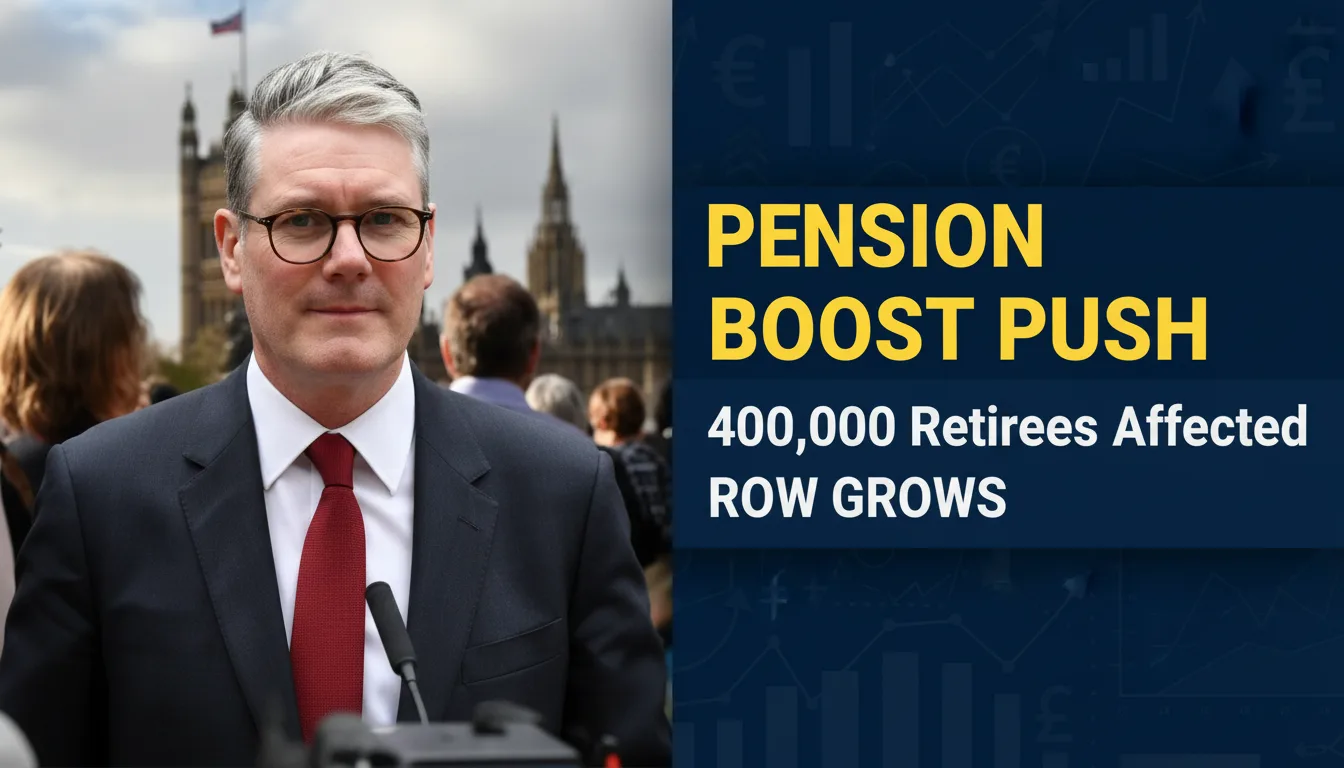
Millions of older people across the UK are feeling the squeeze from stubbornly high living costs — but campaigners say around 400,000 pensioners are being hit hardest by a system that simply leaves them behind.
Charities, MPs, and pensioner groups are now ramping up pressure on the UK Government to deliver a targeted State Pension boost for this overlooked group ahead of next year’s pension review. They argue that these people are not on lower pensions because they did not work, but because of long‑standing structural flaws in the system.
Who is being “left behind”?
The 400,000 people at the heart of this debate are not one neat category of pensioners. Instead, they fall into several overlapping groups who, for different reasons, never built up a full State Pension record. They include:
- People with gaps in their National Insurance (NI) record
- Carers who took time out of paid work to look after children or relatives
- Low‑paid workers who did not always meet contribution thresholds
- People affected by historic changes to State Pension age and qualifying rules
Campaigners say these individuals did what society expected of them — working, raising families, and caring for others — but are now penalized in retirement with reduced weekly State Pension payments.
Why incomplete National Insurance records matter
One of the biggest reasons pensioners miss out on the full new State Pension is missing years in their National Insurance history.
Under the current rules, people usually need 35 qualifying years on their NI record to receive the full new State Pension. Every missing year can cut the amount they get. While today’s system offers credits for some groups — such as carers — many older pensioners never benefited from these protections earlier in life.
Some of the most common causes of gaps include:
- Time spent caring for children or elderly relatives before automatic NI credits existed
- Periods of illness or unemployment where contributions were not recorded
- Years spent in low‑paid or part‑time work that did not reach NI thresholds
Even relatively small gaps can lead to noticeably lower weekly income in retirement.
Why the issue is urgent now
The calls for a targeted pension boost are not new, but they’ve grown louder as financial pressures continue across the UK.
Rising grocery bills, higher energy costs, and more expensive housing have all hit pensioners hard. For those relying mainly or entirely on the State Pension — especially if it is already reduced — there is often very little room to cut back further.
Even with recent increases under the “triple lock” — which raises the State Pension by the highest of earnings growth, inflation, or 2.5 percent — many older people say their income no longer stretches far enough. Some report cutting back on:
- Heating
- Food
- Social activities and community involvement
Unlike working‑age adults, most pensioners do not have realistic options to boost their income through extra work. That makes any shortfall in State Pension payments especially painful.
Campaigners warn that without targeted help, hundreds of thousands of people will continue to struggle unnecessarily, despite having contributed to the system over many years.
Why the triple lock isn’t enough for everyone
The triple lock has played a key role in protecting pension incomes in recent years, but critics say it only tells part of the story.
It works by increasing State Pension payments each year by whichever is highest of:
- Average earnings growth
- Inflation
- 2.5 percent
While that sounds generous, it mainly benefits those already receiving the full State Pension. For people on reduced amounts, a percentage rise on a smaller base still leaves them far behind.
Campaigners argue that without structural changes, the triple lock cannot fix underlying inequalities. A pensioner who missed out on years of credits, for example, continues to receive a lower starting amount, even if it goes up every year.
What changes are campaigners asking for?
Those pushing for reform are not calling for a blanket State Pension increase for everyone. Instead, they want targeted measures aimed squarely at people who lost out due to rules that no longer reflect modern working lives.
Proposals on the table include:
- Allowing older pensioners to plug National Insurance gaps more easily
- Automatically crediting historic years spent caring for children or relatives
- Reviewing the minimum number of qualifying years required, especially for those close to retirement
- Considering a one‑off uplift for affected pensioners to correct long‑standing shortfalls
Supporters say a targeted boost would:
- Reduce hardship for the 400,000 people currently receiving reduced pensions
- Ease pressure on means‑tested support like Pension Credit
- Lower demand on local authority services that step in when older people cannot make ends meet
They argue that, in many cases, these pensioners are not at fault for their reduced payments — the system is.
Political pressure ahead of the next review
With the next State Pension review approaching, political pressure is building.
Several MPs have already raised the issue in Parliament, warning that failing to act would leave hundreds of thousands of older people struggling when help is both possible and overdue. Pensioner charities have intensified their campaigning, urging ministers to commit to reforms in time for next year’s uprating decisions.
Insiders suggest the issue is firmly on the Government’s radar as departments look at long‑term pension sustainability and fairness. However, there has been no formal announcement so far, leaving many affected pensioners in limbo.
For people nearing retirement, the Government’s response could also influence how much trust they place in the State Pension as a reliable foundation for their future plans.
Why a targeted boost could pay off
Supporters of change say this is not just about compassion — there’s a practical, economic case too.
They argue that a targeted State Pension boost could:
- Cut pensioner poverty, particularly among those with little or no private savings
- Improve mental and physical health by reducing financial stress
- Help older people stay active and independent for longer
- Support local economies, as pensioners tend to spend most of their income close to home
In the long run, campaigners believe that investing in fairer pensions now could reduce costs in healthcare and social care by helping people maintain stability and independence in later life.
What happens if nothing changes?
If the Government decides not to act, those warning of inaction say the consequences are clear:
- Inequality within the State Pension system will widen, as those on lower rates fall further behind
- More people will be pushed onto means‑tested benefits like Pension Credit
- Pressure on local councils and support services will increase
- Public confidence in the State Pension could be undermined, especially among people approaching retirement who are watching this debate closely
For the 400,000 already affected, another year without reform could mean yet more financial strain with little hope of improvement.
What pensioners can do right now
While the bigger policy debate plays out, older people are being urged to take practical steps to check whether they’re getting everything they’re entitled to.
Key actions include:
- Reviewing your State Pension forecast to see what you’re due
- Checking your National Insurance record for gaps that might be fillable
- Looking into whether you qualify for Pension Credit or other extra support
- Getting help from advisory services or charities that specialize in pension rights
Staying informed and vocal also matters. Public pressure has often played a crucial role in pushing governments to fix long‑standing problems in the welfare and pensions system.
As the next pension review approaches, all eyes will be on how the Government responds to these renewed calls. For the 400,000 people missing out on a full State Pension, the outcome could shape their daily lives for years to come — and send a powerful signal about how seriously the UK takes fairness and dignity in retirement.